Rustem Yermekov: How AI and STEM are Transforming Schools
Interview with Rustem Yermekov — IT Educator of the Year in Central Asia, Forbes "30 Under 30" laureate, Qbit developer, and ambassador of digital transformation in education.
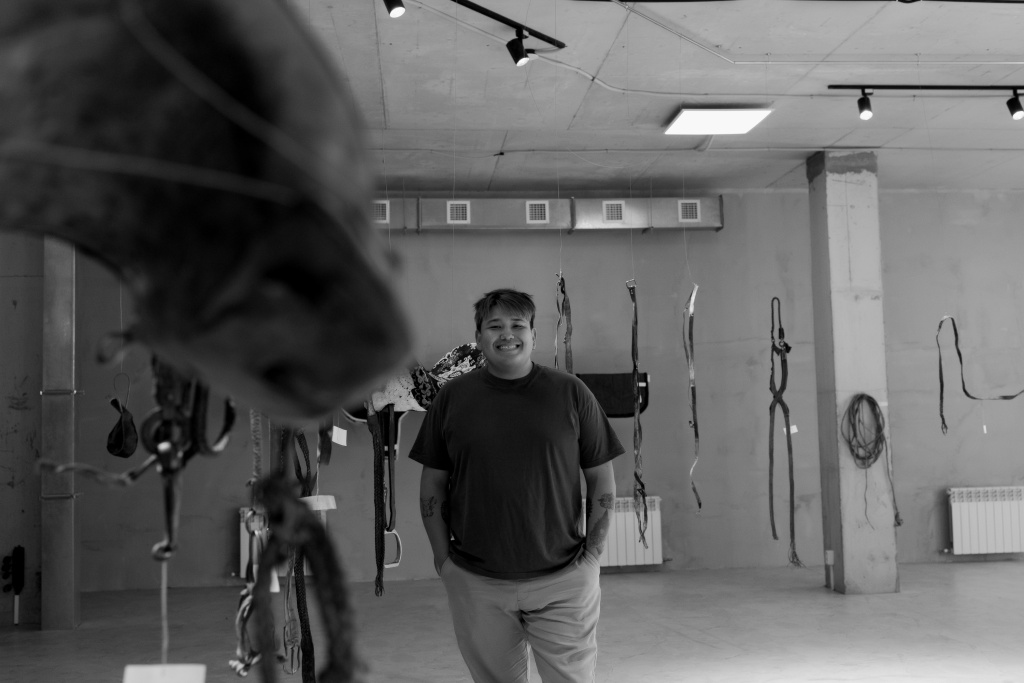
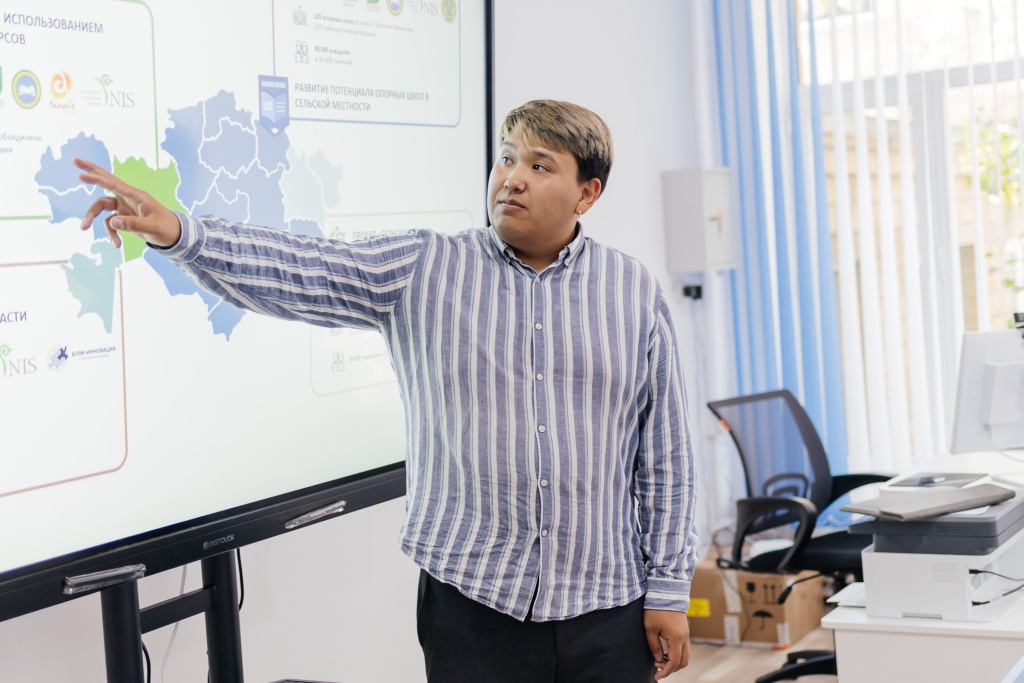
While the whole world argues about whether AI will replace teachers, Rustem Yermekov confidently answers: it won't replace them, but it will become an assistant that takes away routine and expands possibilities. He himself is a living example of how one can work at the intersection of technology and pedagogy. Rustem is a Forbes "30 Under 30" laureate, the best IT educator in Central Asia, the author of the domestic STEAM kit QBit, a speaker at EdCrunch X Global, and a reformer of school education, especially in rural regions.
We talked with him about the place of AI in school, digital mindset, and how a single educator can influence the entire system.
AI as a friend and companion for ideas
— How do you use AI in your pedagogical and project activities?
— For me, AI is neither a miracle nor a threat. It is a companion with whom it is convenient to bounce around ideas. I don't use it as an "all-solving" solution. It's just an assistant — cool, fast, but still just a tool.
There is a concrete example. Using AI, I was able to "virtually" create several iterations of a product. During product development, it was important to quickly create and test iterations.
Problem solving — a skill of the 21st century
— What IT skills, in your opinion, should become basic for every schoolchild today? Are teachers ready for the digital age?
— I can single out one skill and a mindset approach. The skill is problem solving, the ability to find solutions to any problems. The mindset should not be problem-oriented, but solution-oriented. Thinking in terms of problems leads to a standstill. Thinking in terms of solutions is moving forward. Also important is the growth mindset approach. The idea is this: you set a goal and understand that it might take you 1, 3, 10, or 40 years to achieve it. And you walk towards it. You build a system, a path — and you move forward without giving up.
Regarding the level of digital literacy among teachers, I can say that while it still leaves room for improvement, it gets better every year. Here we need to understand that this situation exists worldwide, and Kazakhstan is not alone in facing this problem. UNESCO conducts a global study on the digitalization of education every few years, and low digital literacy often pops up in those findings.
There is interest in STEM. But more often — not from the children
— Do you observe interest among children in programming, robotics, STEM?
— Interest in these areas has always been high, but you need to understand who it comes from. Most often from parents: they see the future of their children in these areas. Although the children themselves might be interested in something else, say, music.
School administrations also get involved: for them, it's a "wow" project that will win them a prize at competitions. But the real interest among the children themselves is about 2–5 out of 20. I say this based on three years of experience launching similar courses.
What will the Kazakhstani school look like in 10 years?
— It is unlikely that radical changes will occur. I imagine the education system as a flat platform on wheels, where each participant is their own unique wheel: small, big, square, round. And this platform moves. The question is — how far and how efficiently.
The system rests on teachers. They are the ones who interact with children the most. And if a teacher has a good mood, they will pass it on to the children. My dream is for the teacher to become not a bearer of knowledge, but a mentor and curator who creates a safe environment where one can make mistakes and grow. We at FURO are currently working on this approach.
— Rustem, tell us about your role at Furo.kz. What do you do as a project manager?
— I try to be useful. I'm good at analyzing large amounts of data. Although I think my uniqueness is that I have been on different sides of the barricades in education. I had a startup in the field of education aimed at developing modern skills, and I was also a teacher. At one time, I opened several of my own courses, wrote curricula, lessons, and camp projects. I think my uniqueness is my experience and my childhood curiosity; I'm simply interested in exploring new things. And at FURO, I got the opportunity to scale my interests at the country level and be a driver of systemic shifts in education.